
Searching Orleans Parish Criminal Dockets
State criminal charges in Orleans Parish run through Criminal District Court. They do not run through the Municipal and Traffic Court search. The City of New Orleans points the public toward Clerk Connect while the old Docket Master workflow is phased out. After creating an account, pick the Orleans criminal inquiry product. Search by Defendant Name or Case Number. The official guide lists several tabs. They include Criminal & Traffic Inquiry, Criminal & Traffic Minute Search, Criminal & Traffic Daybook, and Court Calendar. Viewing is free with the subscription. Printing may carry a charge.
Use the case number whenever your notice gives you one. The guide also lets you choose Magistrate, Criminal, or All case types. Magistrate covers the early first-appearance and bond stage. Criminal holds the section-stage record. Be careful with name results. One person can have several cases in the docket system. The portal displays docket information, dates, rulings, and minute material. A complete filed document or certified copy may still take the clerk record route.
- Confirm that the notice names Criminal District Court.
- Create the Clerk Connect account and select Orleans criminal inquiry.
- Search the case number first or use the defendant-name path.
- Choose Magistrate, Criminal, or All when that option appears.
- Read the latest minute or calendar event, then verify a time-sensitive setting.
Orleans Parish Clerk Connect Transition
Clerk Connect and Docket Master are one system wearing two names. They are not two separate criminal databases. The City moved from Criminal Docket Master to Clerk Connect. Old court pages still point to the former name. The City guide tells users to create a current Clerk Connect account. Pick the Orleans product too. Suppose the old label, a portal result, and the clerk's answer all disagree. Write down the case number and date range, then call the current criminal-record desk.
The Clerk Connect landing page is the door to the portal. The City criminal-justice resource page explains how the local transition works. An empty result proves nothing. A case can still exist in another case type. It might sit at an early Magistrate stage, be restricted, predate the system, or simply fall outside the changing online view of Orleans Parish court records.
Inside an Orleans Parish Criminal Docket
A criminal docket in Orleans Parish is a dated log of court activity. A search can surface the defendant or party line, the case number, case type, court section, event or minute date, hearing type, any ruling, bond or disposition details where available, and the next court date if one is set. A daily docket or calendar summary is different. It lists a section, session, case numbers, charge descriptions, statute references, and appearance notations for a given day. It is not a full case register.
| Case type | Magistrate identifies early processing; Criminal identifies the section-stage case. |
|---|---|
| Section | The Criminal District Court unit responsible for the case. |
| Minute entry | A short record of what occurred at a proceeding. |
| Setting | A scheduled appearance, hearing, docket call, plea, trial, or sentencing event. |
| Disposition | A recorded result that should be read with the latest court entry. |
One caution. A docket line is not a signed judgment, a transcript, a district attorney file, a sheriff record, or a certified clerk copy, so request the exact record you need from the office that holds it.
How a Criminal Case Moves
Most Orleans Parish state criminal cases follow a familiar path. The first stop is Magistrate Court. The initial appearance and bond process happen there. Charges that move forward land in a Criminal District Court section. Arraignment, motion hearings, status settings, plea or trial, disposition, and sentencing may follow. The order can vary. To read any single entry correctly, look at the dates on both sides of it.
Docket flow: Arrest or filing › Magistrate › Criminal District Court section › Motion or trial setting › Disposition › Sentencing or post-judgment event
A reset is not a dismissal. An old hearing notice may not match the setting in place today. What controls is the newest minute entry, any later order, and the section actually assigned to the case. Check those before relying on a docket line. The court's current-news notices matter too, since they can change how a hearing is actually handled.
Courts That Hold Criminal Dockets
Criminal District Court's public contact material lists Sections A through L plus Magistrate Court. Those sections handle the judicial side of state criminal cases in Orleans Parish. The clerk, meanwhile, keeps the court records. It routes requests to the right office. The published record path still matters. Act 15 changed the statutory custodian in 2026 without eliminating the separate criminal court or its daily operations.
You will find the court at 2700 Tulane Avenue, New Orleans, LA 70119. The main court line is (504) 658-9100. For criminal record inquiries, the clerk-record operation takes calls at (504) 658-9000. Older pages list different room and suite numbers. Calling first is wise. The Judicial Administrator does not maintain case-record information.
Orleans Parish Criminal Calendar Notices
Criminal Court section pages can post daily docket links, defendant-information links, and transcript-request links. The current-news page carries closure, weather, remote-session, and courthouse notices. An official holiday calendar is published as well. These sources help with a calendar check. They cannot replace direct confirmation of an individual setting.
Magistrate Court runs on a published seven-day schedule. Weekday sessions sit at 9:30 a.m. and 3:00 p.m. Weekends and holidays get a single 3:00 p.m. session. That schedule does not prove any particular case is set at every session. When verifying an appearance, be specific. Give the clerk or court section the case number. Include the date.
Sealed Dockets and Public Access
Louisiana court records are generally open for examination and copying through the proper custodian. Access still has limits. La. C.C.P. art. 251 spells out the clerk's role in public examination and certified copies. La. R.S. 44:31 backs access to public records. A sealing order can restrict what a docket search returns. So can a protected identifier or a confidentiality law.
Access limits: An expunged arrest or conviction record is confidential under La. C.Cr.P. art. 973 except for specified access. Juvenile records are generally confidential. A missing portal entry can reflect a legal restriction, an old record, or the online-system transition rather than a conclusion about a case.
Orleans Parish Criminal Record Requests
For state criminal records, start with the criminal document-request page. It points to the clerk record office at 2700 Tulane. Prosecution records sit with the district attorney instead. Custody and sheriff records belong to the Sheriff. A transcript comes from the court reporter, not the clerk docket. When you write, be precise. Give the exact case number, party name, document title or date. Say whether you want a plain or certified copy.
The page posts no general per-page copy fee or turnaround time. Ask the clerk before you send anything in. One number it does publish is a $550 nonrefundable processing fee. It applies only to expungement, not to copies generally. Also remember the court's own warning: its clerk cannot give legal advice.
Orleans Parish Criminal Access Help
Criminal District Court has a language-access process for interpreters and translations. If a court event requires that help, request it early. The court also enforces security and entry rules at the Tulane Avenue building. Plan around them before a confirmed appearance. None of this changes what a docket entry says. For procedural routing and record access, the clerk is the right stop. For legal strategy, talk to a qualified attorney.
Orleans Parish Criminal Filing History
Filings, minutes, and the full document file sound alike but are different things. Clerk Connect can lead you to a case number, court section, calendar event, or minute entry. A daily docket may name a hearing session. Still, no single view holds every motion, signed order, transcript, or exhibit. The Act 15 transfer gave the Civil Clerk statutory custody. Even so, the Criminal District Court docket did not become a civil record. The court itself remains the judicial source for its sections and settings.
An online lookup can leave a gap. Write down the exact case number, the event date, and the document name. Then ask the criminal clerk-record route three things. Does the item exist? Does it come plain or certified? Does another custodian hold it? District attorney prosecution material and sheriff custody material move through their own official channels. A focused request wins here. Tie it to one case event. That beats asking for a whole file with no details.
Orleans Parish Expungement Limits
The Criminal Court expungement page lays out a local process. It is not a public case-search tool. Qualifying applicants go through certification, a packet, the fee, filing, and sometimes a hearing. After a record is expunged, Louisiana law restricts public access to it. A missing docket result is never a reliable answer. It cannot tell you whether a case exists or how it ended. The clerk can walk you through the document-request route. But the clerk cannot tell you this. Whether you qualify for expungement is a separate question.
Orleans Parish Criminal Court Sources
The Criminal Clerk information page provides the local record-office and Clerk Connect route.
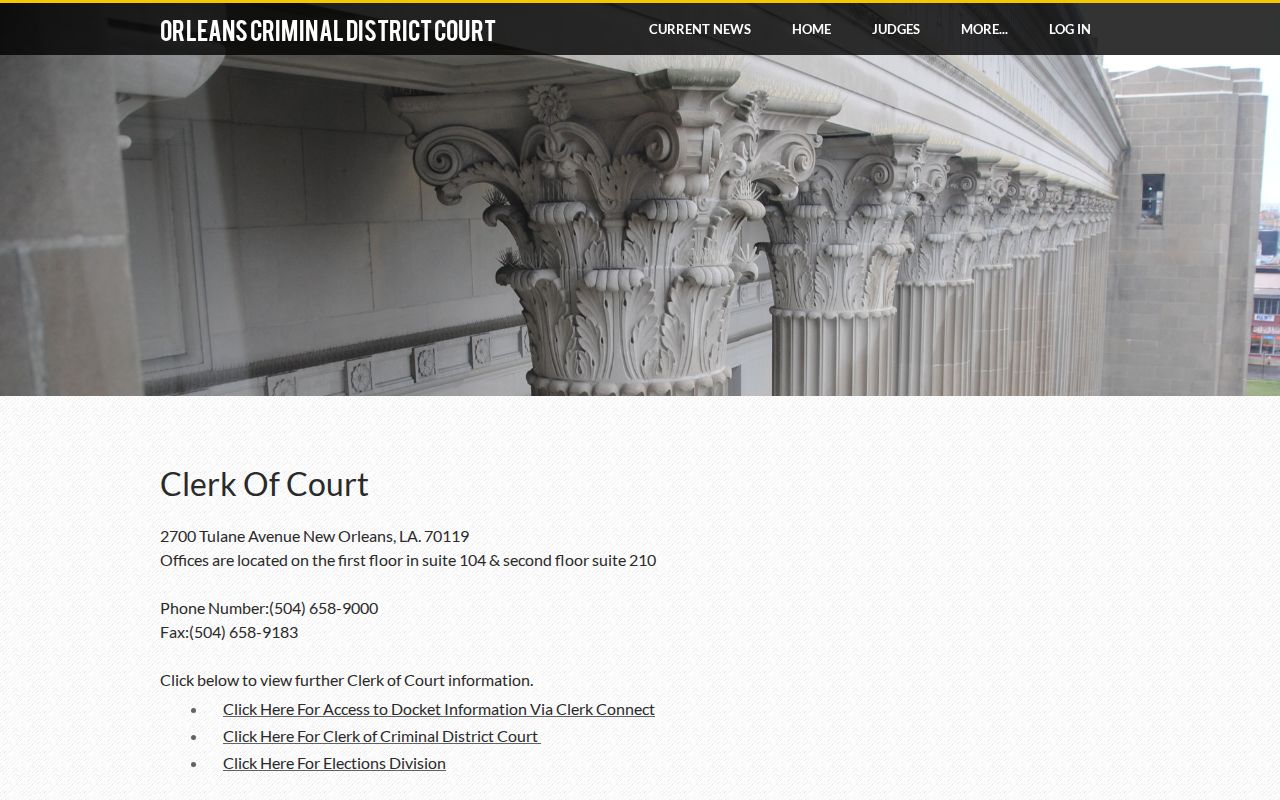
Knowing which courthouse office to call saves real time with criminal records.
The City describes the Clerk Connect portal as its current doorway for criminal inquiries.
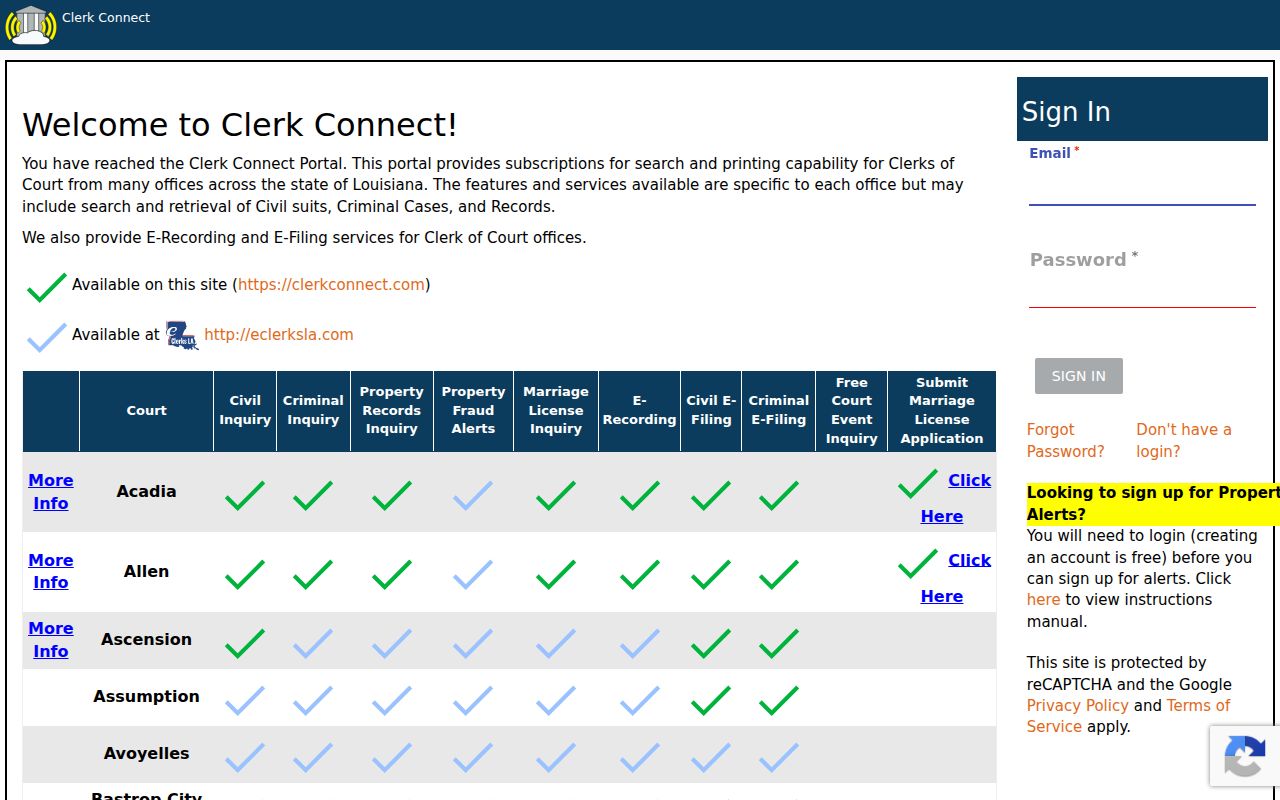
Creating an account and choosing the Orleans inquiry are both steps on the public criminal-search path.
The court's Section G page posts the official daily-docket links.

A daily calendar works well for a scheduled session. Read it beside the case's current docket information for the full picture.